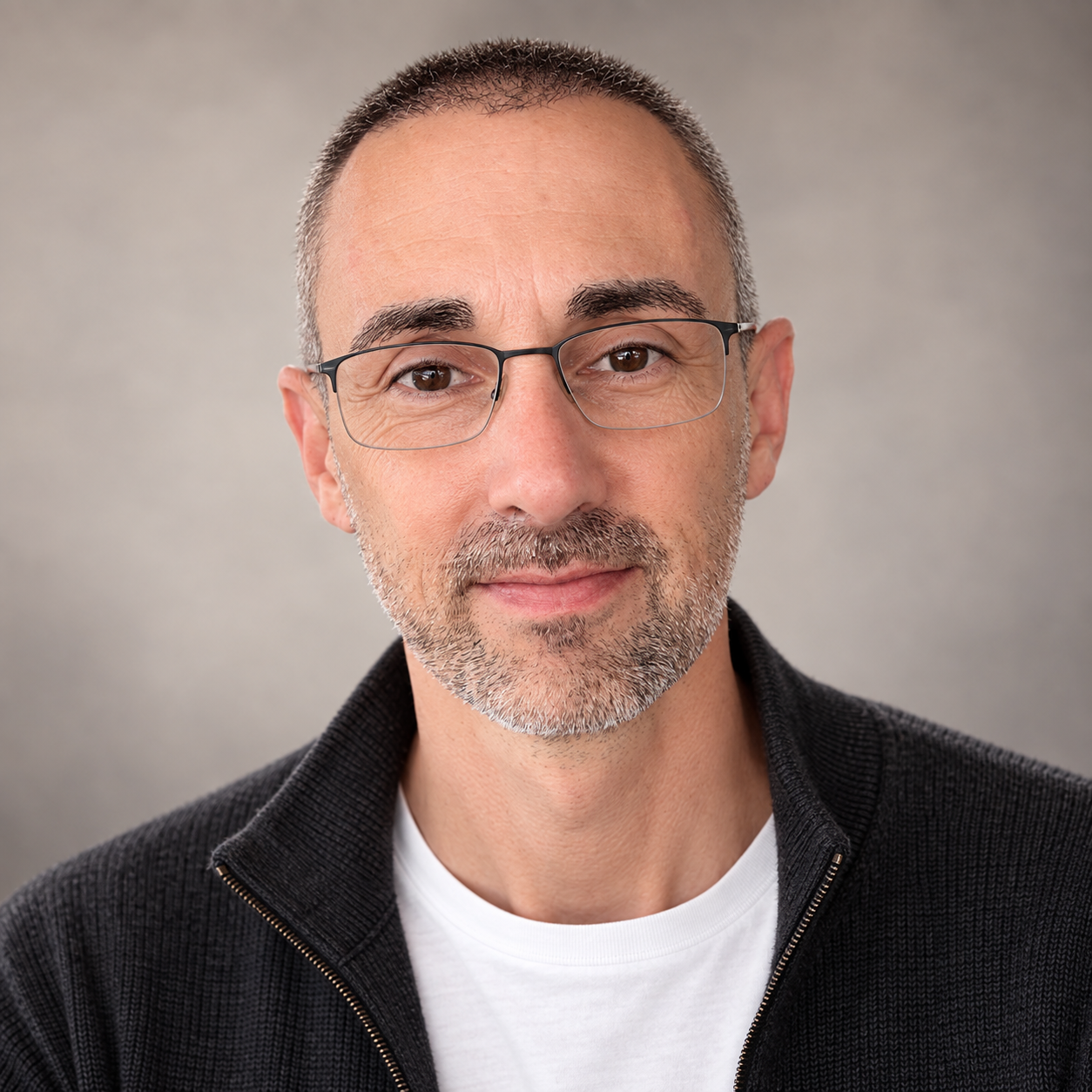
I am Antonio Alves Ramis, although professionally almost everyone knows me as Toni Alves. I have worked in marine electronics for more than twenty-five years. During that time I have installed and repaired equipment, developed my own circuits and helped resolve electrical, navigation and communications problems on a wide variety of vessels.
The work I feel most at home with is diagnosis: understanding why something fails, especially when a problem is intermittent or its source is difficult to locate. I also enjoy finding technology solutions for specific needs on board, combining what I have learned about electronics, electrical systems, computing and telecommunications.
I work from Palma de Mallorca through Área Electrónica de Sistemas S.L. My approach is based on direct contact. I like to get to know the captain or owner, understand how they use their vessel and build a relationship in which we can talk openly about what they need, what is happening and the options for resolving it.
From my studies to my first jobs
I began studying electronics at sixteen, at the Centro de Estudios Industriales. My training covered analogue electronics, digital electronics and, later, microcontrollers and programmable electronics. Those studies were the beginning of a learning process I have maintained throughout my professional life.
My first jobs were in audio equipment repair services. Later, I worked for a private investigation company, installing and maintaining specialised electronic systems. Then came the stage that would shape most of my career: marine electronics, which I began working in around 2000.
Since then I have expanded my knowledge as new needs and tools have emerged. I have always taken a self-directed approach to learning. I have continued studying programming, computing, cybersecurity, electrical systems, circuit design and programmable systems, as well as the technologies I use in my clients’ installations.
That continuity is an important part of my professional identity. My experience has been built through study, fieldwork and many hours spent understanding how equipment works and how different systems interact.
Understanding boats and setting up on my own
When I entered the marine sector, I wanted to better understand the environment I was working in. More than twenty years ago, I obtained the Spanish Patrón de Embarcaciones de Recreo qualification, known as the PER. I did so to learn more about boats and navigation and gain context for my technical work.
To me, it makes sense to understand how a vessel is used before deciding how an installation should work. The equipment being checked is part of a captain’s, crew’s or owner’s everyday life. Understanding that use helps me ask the right questions and assess the importance of each problem.
Around 2011, I began working independently. Four years later, in 2015, I established Área Electrónica de Sistemas S.L., continuing the activity I was already carrying out. Through the company I have continued looking after installations, diagnosing faults and building professional relationships with my clients.
The experience I have gained on board
I have worked on both motor yachts and sailing yachts. Most of my experience is on vessels of around 12 to 32 metres, although I have also carried out work on boats of 40, 60 and up to 84 metres.
Among the sailing yachts I have worked on, Wally yachts stand out in my memory. On the motor yacht side, I have worked on vessels from various European builders, with a significant presence of Italian brands, including those in the Ferretti Group.
In recent years I have also carried out warranty work on boats from brands such as Riva and Sanlorenzo. In these cases I work through a company that subcontracts me to provide technical assistance.
My experience with equipment has been equally varied. During my first period in the marine sector, approximately five to seven years, I mainly installed and supported Simrad systems. Later, I accumulated more than a decade of work with Raymarine and Mastervolt, covering installation, repair and technical support.
Furuno, Victron and B&G have also been a regular part of my work throughout my career. I have also worked with Garmin, Lowrance and other marine brands. I have always tried to help clients with the equipment they have and to stay open to different solutions.
This experience across manufacturers is useful when equipment from different periods shares the same boat. It allows me to approach the installation with its connections, settings and the needs of the system as a whole in mind.
My speciality is finding the source of the problem
If I had to identify the work I feel best equipped for, it would be troubleshooting or fault diagnosis. I am particularly interested in problems that occur randomly, are difficult to reproduce or require investigation across several parts of an installation.
My starting point is listening to the person using the boat. When the fault appears, what was running at the time, whether it happens under way or in port, and what has changed recently can all help guide the work. I then organise checks to compare those observations with measurements and tests.
Depending on the case, this may involve checking a power supply, tracing a signal, checking cabling or studying a network configuration. I aim to use the right tools for each check, including an oscilloscope when I need a closer look at electrical behaviour or signals.
With an intermittent fault, assuming its cause too early can lead to the wrong decision. That is why I try to distinguish what has been verified from what is still a hypothesis. I also believe it is important to explain what has been found, what could be corrected and what needs further testing.
My approach is to diagnose before proposing replacements. When equipment needs replacing or an installation needs rethinking, I want to be able to explain why and how that decision fits into the rest of the system. If an issue needs a particular specialist, I see recognising that and providing the information needed to continue as part of the job.
Internet on board and remote support
Over the last decade, an increasing part of my activity has focused on telecommunications, internet on board and remote support. This development is directly connected to my interest in computing and networks.
I work with Starlink, 4G and 5G mobile communications, Wi-Fi and Peplink equipment. I look after both internet access and the network that distributes it within the boat. Antenna placement, cabling, power supplies and coverage are all part of the same installation.
I also work with managed switches, IP addressing and VLAN segmentation. Where appropriate, these tools allow owners’, guests’, crew and technical systems’ connections to be organised separately, making it easier to understand what is connected and how it communicates.
Remote support provides useful ways to review settings, investigate issues and prepare an intervention. I use it when authorised and when access conditions allow it. Its usefulness depends on knowing the installation and having the information needed to interpret what is happening.
My aim in this area is for connectivity to match the vessel’s actual use and for the network to have a clear structure, both for use and for maintenance.
Monitoring and programmable systems
Monitoring and automation are another part of my professional development. I have experience with systems such as NavioP and continue to expand my knowledge of ways to supervise equipment, record incidents and access information remotely.
I have worked with PLCs and programmable systems from Siemens and WAGO, as well as platforms such as Arduino and Raspberry Pi. These tools allow me to explore specific solutions when a need is not adequately met by a device’s usual configuration.
Applications I have developed or studied include energy monitoring, sensors, alarms and logging bilge pump activations. I want the information collected to serve a practical purpose: understanding how a system works, detecting behaviour that should be checked or making technical follow-up easier.
The choice of a solution depends on what the boat needs and how it will be maintained. I aim to ensure every added function has a purpose and that its use can be explained clearly.
Designing and making my own solutions
For years I designed and manufactured circuit boards in-house for my own projects, which I then installed on clients’ boats. This work allowed me to develop solutions for specific needs and connect electronic design with its application on board.
Over time, I kept designing my own boards and began commissioning manufacturing in Asia, taking advantage of the production tools and services that were becoming available. This change allowed me to improve manufacturing quality, reduce sizes and tackle more complex circuits.
In 2014, I began working with 3D printing, using a BQ Witbox 1. I later added manufacturing tools such as a CO₂ laser and a CNC router. I use them for brackets, enclosures, panels, adaptations and prototypes that complement the electronics work.
Having these capabilities allows me to consider a need from several perspectives: the circuit, the programming, the connection to other equipment and how to mount it. I value being able to test an idea, review how it fits and improve it before considering it validated.
Current projects and learning
Programming, automation and digital tools still occupy part of my learning and development time. My own projects include MarineBlackboxTool, a tool under development intended to support diagnosis and technical documentation.
I also study and evaluate artificial intelligence applications related to my work. My interest lies in their practical usefulness for organising information, helping with analysis or supporting technical work. These are areas I continue to explore, with the same need to verify results that I apply to the rest of my work.
I share part of this journey on my blog. There I write about marine electronics, connectivity, electrical installations, tools, 3D printing and my own projects. Writing helps me organise what I have learned and explain issues that arise in everyday work.
My relationship with clients
I like dealing directly with the people I work for. I want a captain or owner to feel comfortable explaining a problem to me and to know that I will take it seriously. To me, that relationship requires listening, knowing the installation and speaking clearly about technical decisions.
I prefer to maintain a client base I can look after well. I want the time to get to know their boats and take responsibility for each job. Personal contact and follow-up are part of the service I want to offer, and they need room in the way I organise my activity.
An idea I often repeat is ‘less is more’. I apply it to the size of my activity and to the solutions I propose. I want complexity to be justified by a need and each installation to be understandable and maintainable.
I value the quality of the work above the speed of execution. I know that an issue can be urgent, but I want decisions to be based on checks and the client to understand what can be resolved and what needs more time. Taking on commitments I can fulfil properly matters to me.
When someone places their trust in me, I hope they find experience, technical judgement and an approachable person. Ultimately, that is the professional relationship I seek: knowing the boat, understanding the needs of those who use it and providing solutions with care and commitment.